
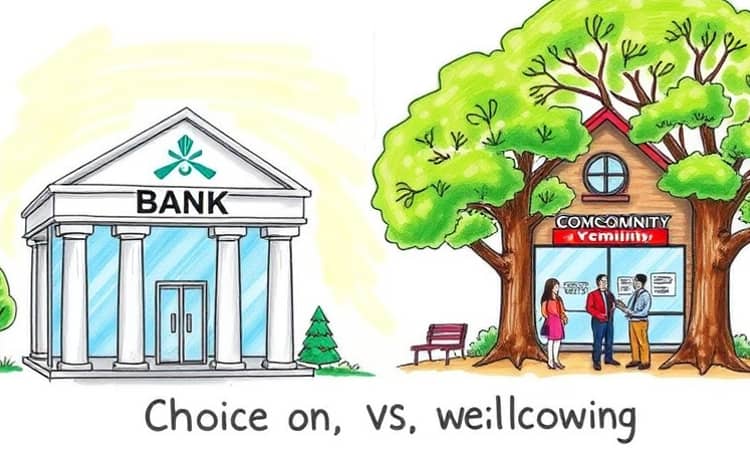
Making a choice between a bank and a credit union for your personal loan can feel overwhelming. Each option brings unique advantages in rates, fees, service, and accessibility. By understanding how these institutions differ in structure, membership, and regulatory protections, you can confidently choose the best path for your financial goals.
Understanding the Fundamental Differences
Banks operate as shareholder-owned, publicly traded for-profit institutions, with a primary goal of generating returns for investors. They offer a broad spectrum of products, from checking accounts to mortgages, and leverage advanced technology to streamline services. Conversely, credit unions are member-owned, not-for-profit local cooperatives, dedicated to serving their community of members. Earnings are returned to members through lower rates and reduced fees rather than profits for shareholders.
In a bank, profits after operational costs are distributed to investors or used to expand services and technology. This profit incentive can drive innovation but also prioritize revenue generation. In contrast, credit unions reinvest earnings into the organization, often funding member education programs, financial counseling, and lower rates. This structure fosters a collaborative environment where members’ financial success becomes a shared outcome rather than a byproduct of market demands.
Both banks and credit unions are subject to federal oversight and guarantee deposits up to $250,000—banks through the FDIC, credit unions via the NCUA—ensuring any deposits you make are protected regardless of your choice.
Interest Rates, Fees, and Financial Impact
One of the most tangible differences between banks and credit unions lies in their approach to rates and fees. Credit unions typically offer lower interest rates and fewer fees on personal loans, given their not-for-profit model. Banks often charge higher APRs but compete by bundling services and rewards, appealing to customers seeking convenience and integrated financial products.
This table highlights how rates can vary. For a borrower with strong credit, a credit union might offer a rate several points below a bank’s quote, saving hundreds in interest over the life of the loan. However, if you value rapid digital disbursement and broad branch networks, a bank could better suit urgent or multifaceted financial needs.
Beyond APRs, fees can significantly affect loan affordability. Banks commonly charge origination, late payment, and annual maintenance fees, which can add up over time. Credit unions often waive or minimize these charges, focusing on member-centric financial service products. When comparing offers, always request a clear fee schedule to calculate the true annual percentage rate, combining both interest and fees into a holistic cost assessment.
Access, Membership, and Application Processes
While anyone can walk into a bank branch or apply online, credit unions require membership before loan applications. Qualifying typically involves a connection to a professional group or geographic area, sometimes with a small one-time fee. Once approved, members enjoy the same application steps as bank customers, but often with holistic consideration beyond credit score, as credit union boards may review applications with a personal touch.
- Eligibility through residence, employer, or group affiliation
- Nominal one-time membership or share purchase fee
- Standard credit check and income verification requirements
Many credit unions participate in nationwide shared branching networks, allowing members to access services at branches beyond their local footprint. While the network of physical locations may be smaller than national banks, this cooperative model ensures that members still enjoy broad convenience. ATM fee refunds and low surcharge networks further bridge the gap in physical accessibility.
Bank applications usually proceed more quickly due to centralized underwriting and advanced digital platforms. If speed and nationwide accessibility are paramount, large banks with robust online tools might be preferable. But if you value a community-oriented approach with potentially more lenient criteria for borderline applicants, credit unions can be a powerful resource.
Pros, Cons, and Decision Drivers
Your decision will ultimately hinge on balancing convenience, cost, and personalization. Banks offer greater product variety and digital convenience, making them ideal for borrowers seeking a seamless, tech-driven experience and multiple financial services under one roof. Credit unions excel with personalized service and community focus, fostering lasting relationships and often prioritizing member welfare over profit.
- Pros of Banks: expansive ATM networks, advanced mobile apps, diverse loan options
- Pros of Credit Unions: competitive rates, minimal fees, member-focused support
- Cons of Banks: higher fees, standardized criteria, less personalized service
- Cons of Credit Unions: limited branch locations, membership requirements, varying technology
Ultimately, the decision transcends simple numbers. Emotional satisfaction from supporting a community institution or the reassurance of a well-known national bank can shape your borrowing experience. Weigh these intangible benefits alongside objective cost comparisons to align your choice with both financial and personal values.
Maximizing Your Borrowing Power
Regardless of choice, there are strategies to secure the best personal loan offer. Start by reviewing your credit report and boosting your score wherever possible. Paying down existing balances, correcting errors, and avoiding new credit inquiries can lead to rate reductions. Next, gather pay stubs, tax returns, and documentation highlighting stable income to streamline underwriting.
Compare APR quotes from multiple institutions before committing, and ask about autopay discounts or loyalty rate reductions. Consider the total cost of borrowing, including origination fees and potential prepayment penalties, so you can make an informed decision. When you present competitor offers, many lenders may match or beat them to win your business, giving you leverage to negotiate better terms.
When to Choose a Bank and When to Choose a Credit Union
Every borrower’s situation is unique, but here are some guiding principles:
- Urgent funding needs with minimal paperwork: banks typically provide faster disbursements.
- Strong community ties or desire to support local cooperatives: credit unions strengthen local economies.
- Preference for a full suite of digital financial tools: leading banks frequently roll out innovative apps.
- Long-term relationships and potentially lower overall borrowing costs: credit unions often reward loyalty with special member rates.
Balancing these considerations will help you select the institution that not only provides funds but also aligns with your financial values and future plans.
Conclusion
Choosing between a bank and a credit union for personal loans is more than a financial transaction—it’s a reflection of how you want to engage with your money and community. Whether you prioritize cutting-edge digital tools, expansive physical access, or a neighborly approach to lending, understanding key differences empowers you to make a confident decision.
Take time to research rates, review membership requirements, and consider the intangible benefits of personalized service. Armed with this knowledge, you can secure a loan that supports your present needs and future aspirations while reaffirming your values in the process.
As financial landscapes evolve, new lending alternatives like peer-to-peer platforms and fintech solutions emerge. However, traditional banks and credit unions remain pillars of responsible lending. By staying informed, comparing rates, and understanding institutional values, you can craft a borrowing strategy that provides immediate support and long-term financial health.
References
- https://www.investopedia.com/banks-credit-unions-best-for-personal-loan-7570430
- https://www.nerdwallet.com/article/banking/credit-unions-vs-banks
- https://www.investopedia.com/credit-unions-vs-banks-4590218
- https://www.nerdwallet.com/article/loans/personal-loans/personal-loan-bank-credit-union
- https://www.bankrate.com/loans/personal-loans/average-personal-loan-rates/
- https://www.nerdwallet.com/article/loans/personal-loans/average-personal-loan-rates
- https://www.bankrate.com/loans/personal-loans/documents-required-for-personal-loan/
- https://www.ccu.com/learn/banking-basics/credit-union-vs-bank/