
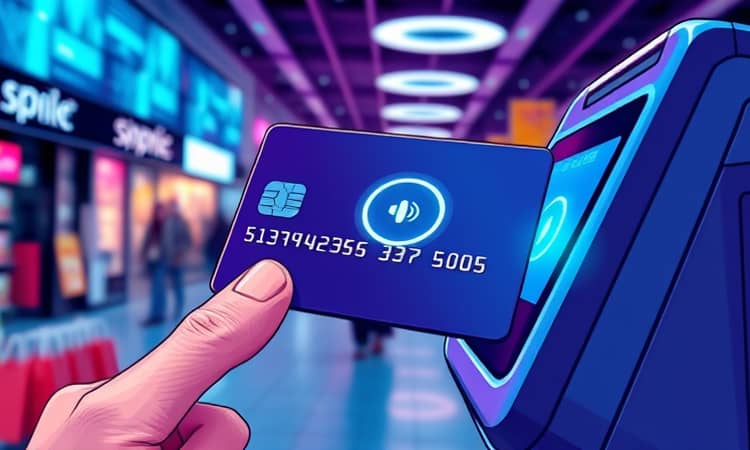
In an era where speed, security, and convenience drive innovation, contactless credit cards have emerged as a defining force in financial transactions. From small retail shops to major transit systems, the simple act of tapping a card is transforming how we pay.
Understanding Contactless Technology
Contactless credit cards leverage radio-frequency identification (RFID) or near-field communication (NFC) technology to communicate with payment terminals. By embedding a tiny chip and antenna within the card, issuers enable users to complete purchases with just a wave or tap.
The distinctive sideways Wi-Fi symbol—four curved lines—indicates a card’s contactless capability. Beyond plastic, the same technology integrates with smartphones, smartwatches, and wearable devices through digital wallets like Apple Pay and Google Pay.
How Contactless Payments Work
- The card’s antenna emits a signal to the terminal at a distance of a few inches.
- A one-time security code is sent between device and reader.
- Encrypted authentication confirms the transaction.
- The entire process takes place in under a second.
- Funds are settled through existing card networks without sharing sensitive data.
This rapid interaction makes contactless transactions up to ten times faster than swiping or inserting a chip, minimizing queues and improving customer satisfaction.
Security Features and Protections
Despite early concerns about unauthorized scans, contactless payments incorporate robust defenses. Each transaction uses tokenization, replacing actual account numbers with unique tokens. These tokens are useless if intercepted.
Additional safeguards include:
- Encrypted transactions that protect sensitive data.
- Compliance with PCI Contactless Payments on COTS (CPoC) standards.
- Optional multifactor authentication through card-linked mobile apps.
- Device-level security for digital wallets, including biometric locks.
Because the private key remains encrypted on the card and never leaves the device, merchants receive only a hashed number, not genuine account details.
Key Benefits for Consumers and Merchants
Contactless payments offer compelling advantages for both sides of the counter. Consumers enjoy frictionless checkouts, while merchants benefit from faster service and reduced handling of cash.
Current Trends and Future Outlook
Global adoption of contactless cards has accelerated post-pandemic, driven by consumer preference for touchless solutions. Major economies now issue contactless cards by default, phasing out magnetic stripes in favor of EMV and NFC-enabled designs.
Transit authorities worldwide also embrace contactless fare systems, offering seamless travel experiences. Looking ahead, integration with emerging technologies—such as wearable payment rings and biometric authentication—promises to further refine the payment landscape.
Implementation by Major Financial Providers
- Capital One equips most new cards with contactless chips as standard.
- Visa and Mastercard promote tap-and-go through global marketing campaigns.
- American Express introduces rewards and promotions to drive tap usage.
By incentivizing contactless transactions, issuers accelerate consumer migration and drive deeper engagement with mobile wallets.
Consumer Adoption and Behavior Patterns
Surveys reveal that users perceive contactless payments as both more secure and user-friendly. Younger demographics, in particular, value the effortless nature of tap-and-go, while older consumers appreciate reduced fumbling at checkout.
Education campaigns focus on highlighting safety measures and encouraging users to monitor transaction alerts via banking apps. As familiarity grows, so does trust in the technology.
Navigating Challenges and Barriers
While adoption surges, certain obstacles remain. Infrastructure gaps in rural or developing regions slow nationwide rollouts. Some merchants delay upgrades due to perceived costs of new terminals.
Moreover, public misconceptions about RFID skimming prompt the need for clearer communication. Financial institutions can address these concerns by showcasing success stories and offering protective accessories like RFID-blocking sleeves.
Looking Ahead: The Evolution of Payments
Contactless credit cards represent a pivotal step toward a fully digital economy. As the payments ecosystem evolves, we can expect deeper integration of loyalty programs, dynamic pricing models, and peer-to-peer tap payments.
Financial experts predict that within the next decade, a majority of global transactions will occur without physical swipes or inserts. The convergence of blockchain, Internet of Things (IoT), and AI-driven fraud detection will shape an environment where payments are invisible, instantaneous, and virtually risk-free.
For consumers, the shift means liberating time and simplifying daily interactions. For businesses, it translates into operational efficiencies and elevated customer experiences. Embracing contactless credit cards today is embracing the future of commerce.
References
- https://en.wikipedia.org/wiki/Contactless_payment
- https://www.capitalone.com/learn-grow/privacy-security/contactless-credit-cards/
- https://usa.visa.com/pay-with-visa/contactless-payments/contactless-payments.html
- https://www.mastercard.com/news/perspectives/2025/contactless-101-what-you-need-to-know-about-tap-and-go/
- https://n26.com/en-eu/contactless-card
- https://www.entrust.com/blog/2022/02/contactless-credit-card-and-its-security-understanding-the-facts
- https://www.chase.com/personal/credit-cards/education/basics/what-your-credit-card-style-says-about-you
- https://staxpayments.com/blog/tap-to-pay/