Advertisement
Published on:
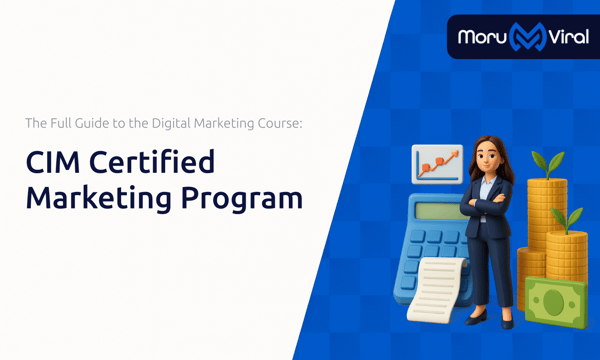
CIM Certified Marketing Program: The Full Guide to the Digital Marketing Course
Loading content for you…
Published on:
This guide explains the Digital Marketing Course offered under the CIM Certified Marketing Program.
It covers course levels, delivery formats, assessments, career outcomes, costs and practical tips for applicants.
You will find clear summaries of what to expect and how the program can fit into an employer-led apprenticeship or individual professional development path.
Read on for a complete walkthrough of the CIM Digital Marketing Course so you can decide if this professional pathway aligns with your goals.
CIM offers structured digital marketing qualifications across multiple levels to match experience and career stage.
Selecting the right level depends on your experience and career ambitions, and each level builds clear, employer-relevant competencies.
The CIM Digital Marketing Course combines practical skills with professional recognition to accelerate marketing careers.
Employer-Recognised Qualification
Employers value CIM credentials as evidence of structured training and modern marketing knowledge.
Modular and Flexible Learning
Choose modules that match your role and study through a mix of workshops, online learning and practical assignments.
Career Progression
Graduates often find promotions or new roles after completing CIM units because of the practical, employer-led curriculum.
Apprenticeship Funding Compatibility
Apprenticeship routes can cover costs and make professional development accessible for both new and established staff.
CIM qualifications are delivered through a mixture of face-to-face workshops, virtual classes and supported online study.
The blended delivery model balances knowledge checks with practical application to ensure readiness for workplace challenges.
The CIM Digital Marketing Course targets a broad range of learners from entry level to senior marketers.
If you want employer-recognised credentials and practical marketing skills, the program is designed to support that progression.
Completing CIM modules can translate directly into improved employability and clearer career paths.
The course is built with employer input, which helps align learning outcomes with real hiring needs.
This balanced view helps you weigh strengths and potential limitations before committing to the program.
CIM qualifications are developed with employer input to reflect current marketing needs.
Modular structure allows learners to pick modules relevant to their role and schedule.
Apprenticeship funding and employer sponsorships can reduce or remove participant costs.
Balancing study with full-time work can be challenging and requires disciplined time management.
Training experience can vary by provider, so selecting a reputable provider matters for outcomes.
Some CIM qualifications cannot be completed entirely within an apprenticeship without additional arrangements.
One of the program's practical advantages is how it integrates with employer apprenticeships and funding mechanisms.
Understanding employer funding and apprenticeship routes is essential before enrolling to ensure affordability and alignment with career plans.
Moru Viral recommends the CIM Digital Marketing Course because it combines industry-relevant skills with formal professional recognition.
The modular design makes it easy to align learning with job needs, and apprenticeship compatibility broadens access to funded routes.
CIM's employer-led curriculum improves the chances that what you learn will be useful immediately in the workplace.
Selecting the appropriate level depends on your prior experience and your career objectives.
Match module choices to the skills you need to perform your current role or the role you want next.
Begin by speaking with your employer or a training provider to explore apprenticeship and course options.
• Discuss course entry and employer sponsorship with your HR or apprenticeship coordinator.
• Contact a qualified CIM training provider to ask about delivery, schedules and exam arrangements.
• Request details about exemptions, duration and assessment formats before you enrol.
Success in CIM assessments depends on focused preparation and practical application of concepts.
Consistent practice and applying learning directly to workplace tasks will improve exam performance and retention.
A full CIM Qualification is not always delivered entirely within an apprenticeship, but modules or module awards can sometimes be integrated with employer and provider agreement.
There is typically no cost to the apprentice when the employer funds the training via apprenticeship schemes, but confirm specifics with your employer.
An approved End-Point Assessment Organisation performs the formal assessment at the end of the apprenticeship, and CIM acts as such an organisation for marketing apprenticeships.
Yes, many employers recognise CIM credentials and value their industry alignment and practical focus.
Completing CIM modules can sometimes lead to exemptions or recognition on other professional routes and degrees.
Ongoing development keeps your skills current and helps you capitalise on the training investment.
The CIM Digital Marketing Course is a structured way to gain practical, employer-focused marketing skills across experience levels.
Apprenticeship routes and employer funding make it accessible and relevant to workforce development needs.
For professionals seeking recognised credentials with clear workplace application, Moru Viral highlights CIM as a credible and practical option.

At Moru Viral, our team brings together journalists, analysts, and creators who translate complex topics into practical, accessible content. We work with reporting, clarity, and a touch of lightness so ideas really catch on and help you decide with more confidence.
Learn more about our team »